Why am I gaining weight after menopause?

Are you feeling frustrated by post-menopausal weight gain even though your diet hasn’t changed?

You’ve finally crossed the line of menopause and are expecting things to finally settle back down, yet you’ve found your weight is slowly creeping up, particularly around your midsection, but your diet and exercise habits haven’t changed.
I see this regularly in my clinic: women wondering what’s going on and what they can do about it. Weight gain after menopause isn’t just about calories; it’s about a whole-body shift that’s happening beneath the surface.
In naturopathic and nutritional medicine, we look at how the entire landscape of the body changes after your periods stop. Here’s what may be behind that stubborn weight for some people.
Your adrenals are taking over from your ovaries
When your ovaries stop producing oestrogen, your adrenal glands (your stress response system) have to pick up where they left off. They become the primary source of back-up oestrogen.
If you are stressed, rushing around all day, or surviving on poor sleep, your adrenals prioritise producing stress hormones like cortisol over sex hormones. High cortisol acts like a chemical signal telling your body to hold onto fat, specifically visceral fat around the abdomen, to protect itself. This is where supporting the nervous system and restorative sleep becomes a priority.
Some useful tips I suggest to clients include deep, regular breathing exercises; daily walks in nature; meditation before sleep; reducing screen time before bed; Epsom salt and magnesium flake baths with lavender essential oils in the evening; and herbal sleep teas. All can support an overactive nervous system and help the body calm down from a busy or stressful day.
Lean muscle and metabolic decline
With age and the drop in oestrogen, our bodies naturally lose lean muscle mass, a process called sarcopenia. Muscle is your primary metabolic engine; it’s what burns calories even when you are sitting on the couch. As muscle declines, your resting metabolic rate slows down. If you keep eating the exact same way you did ten years ago, your body now registers that as a caloric surplus, which slowly leads to weight gain.
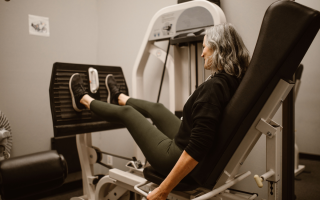
Working with a personal trainer can be a safe way to build muscle mass slowly through strength-training exercises. Building muscle has many benefits beyond weight management as we age, including supporting bone health, balance, and blood sugar (muscle acts like a sponge for glucose!).
Fluctuating insulin sensitivity
Oestrogen plays a huge role in how your body handles carbohydrates, helping to keep your cells sensitive to insulin. When oestrogen drops after menopause, you can become more prone to insulin resistance.
This means your body is more likely to store glucose as fat rather than burning it for immediate energy, leading to energy crashes, sugar cravings, and weight gain. Increasing protein, healthy fats, fibre and switching to whole grains, along with regular exercise, can all contribute to increasing insulin sensitivity and blood sugar balance.
Gut microbiome changes
Our gut bacteria change as our hormones change. After menopause, a decline in microbial diversity can impact the estrobolome, which is the collection of gut bacteria involved with metabolising and modulating oestrogen. An imbalanced gut can increase systemic inflammation, disrupt hunger signalling hormones like ghrelin and leptin, and alter how efficiently you use calories from your food.
Eating plenty of colourful plant foods can support a healthy gut microbiome because the fibre and polyphenols they contain are a food source that feeds the healthy microbes, which encourages their proliferation, which in turn benefits our health.
Fat becomes a source of oestrogen
When the ovaries stop producing oestrogen after menopause, the adrenals become the next source of production, but so do fat cells. Through a process called aromatisation, fat cells can produce oestrogen; this is another hypothesis for the reason some women gain menopausal weight.
How can a nutritionist help?
Because this weight gain is systemic, trying to starve or over-exercise your way out of it can only backfire. It places more stress on your adrenals, drives up cortisol, and can cause your body to cling to fat even harder.
Instead, we need to work with your new biochemistry using a supportive, lifestyle-first approach. A nutritionist can help you with balancing your meals so they are nutrient-dense, contain enough protein, healthy fats and fibre to protect lean muscle mass, balance sugar and insulin levels and support a healthy microbiome.
Supporting your adrenals and nervous system using food, targeted supplements, herbs and relaxation techniques can all help to keep things more in balance.
Gut and liver support is another important area that needs attention because your liver metabolises hormones, and your gut eliminates them. Supporting these pathways ensures your body is processing and balancing everything efficiently.
Your post-menopause years should be about vitality, confidence, and feeling at home in your own skin. Your body has simply stepped into a new season, and it just needs a different kind of care and support than it did previously.
References
Ryan, A.S. et al. (2025). The effects of weight loss and aerobic exercise on cortisol and cortisol suppression in postmenopausal women with overweight and obesity. Endocrine Research, 50(2), 87–95.
Hetemäki, N. et al. (2017). Estrogen metabolism in abdominal subcutaneous and visceral adipose tissue in postmenopausal women. The Journal of Clinical Endocrinology & Metabolism, 102(12), 4588–4595.
Jankie, S. and Pinto Pereira, L.M. (2021). Targeting insulin resistance with selected antidiabetic agents prevents menopausal associated central obesity, dysglycemia, and cardiometabolic risk. Post Reproductive Health, 27(1), 45–48.
Peters, B.A. et al. (2022). Menopause is associated with an altered gut microbiome and estrobolome, with implications for adverse cardiometabolic risk in the Hispanic Community Health Study/Study of Latinos. mSystems, 7(3), e00273-22.

Find the right nutritionist for you
All nutrition professionals are verified