
A rainbow on your plate: the Mediterranean diet

You are here, reading these words, and perhaps already wondering about the role food plays in your health. Research suggests that a colourful, Mediterranean-style way of eating may offer meaningful support for brain health, memory function, and digestive well-being compared to the average British diet. While it is not a quick fix, it can help support cognitive resilience, gut health, and overall well-being over time.
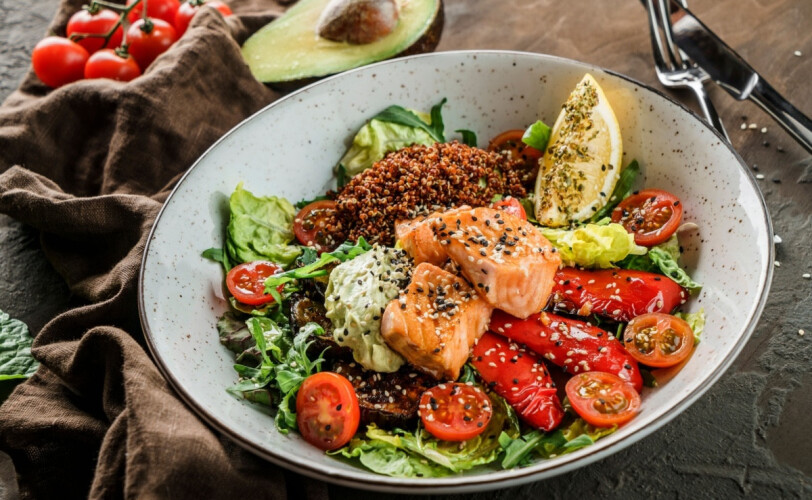
Food as part of your brain and gut health toolkit
The Mediterranean way of eating described below is not a rigid diet. It is entirely possible to learn how to eat in a different way, at a pace that suits you. With guidance from a Nutritional Therapist, you can choose whether to make gradual changes or adjust more quickly.
This approach is a flexible template inspired by traditional eating patterns in countries such as Greece and Italy, where meals are built around simple, minimally processed foods. Over time, this style of balanced eating may help support key processes involved in both brain and digestive health, including inflammation, oxidative stress, and the gut–brain axis.
What does a Mediterranean pattern look like?
At its heart, the Mediterranean approach is simple and practical. It uses everyday foods available in most supermarkets and can be adapted to your culture, budget, and preferences. The emphasis is on balance and variety rather than perfection.
In practice, that usually means:
- Plenty of vegetables and fruits throughout the day.
- Whole grains such as oats, wholemeal bread, brown rice, and wholewheat pasta as your main carbohydrate sources.
- Regular use of olive oil as your main added fat.
- Frequent plant proteins such as beans, lentils, chickpeas, nuts, and seeds.
- Moderate amounts of fish, poultry, eggs, and fermented dairy such as yoghurt.
- Smaller, less frequent portions of red and processed meats, pastries, and highly processed snack foods.
What makes this pattern so powerful is not one “superfood,” but the combination. Whole foods provide macronutrients, micronutrients, and phytonutrients in a way that isolated supplements cannot fully replicate. At the same time, this diversity of plant-based foods helps nourish the gut microbiome, which plays a central role in digestion, immune function, and communication with the brain.
Why this matters for brain, memory, and digestive health
Brain health and digestive health are closely connected through the gut–brain axis. This two-way communication system links the gut microbiome with the central nervous system, influencing cognition, mood, and even memory.
Processes such as oxidative stress and low-grade inflammation can affect both brain function and gut integrity. Supporting one often benefits the other.
A Mediterranean-style diet can help in several ways:
- It is naturally rich in antioxidants and anti-inflammatory compounds from vegetables, fruits, herbs, spices, nuts, and olive oil.
- Wholegrains and fibre support a diverse and balanced gut microbiome, which in turn produces metabolites (such as short-chain fatty acids) that influence brain function and inflammation.
- Fermented foods like yoghurt contribute beneficial bacteria that support digestion and gut barrier function.
- Healthy fats from olive oil, nuts, seeds, and oily fish help maintain cell membranes, including those in the brain and gut lining.
Research suggests that people who follow Mediterranean or related patterns, such as the MIND diet, may experience better cognitive performance, improved memory, and a lower risk of cognitive decline.
These findings highlight the importance of your overall dietary pattern, not just for the brain, but for the gut systems that help regulate it.
Colour on your plate: fruits and vegetables
One of the most visible and enjoyable aspects of this way of eating is the emphasis on colourful fruits and vegetables. Think of your plate as a spectrum: the more colours you include over the course of a week, the broader the range of protective compounds you consume.
Fruits and vegetables provide:
- Vitamins and minerals needed for brain function, immune support, and overall health.
- Fibre to support digestion, bowel regularity, and a healthy gut microbiome.
- Phytonutrients that act as antioxidants, helping to protect both brain cells and the gut lining from everyday stress.
A useful target is at least five portions of fruits and vegetables a day, with many people benefiting from more. A portion is roughly 80 g, such as three tablespoons of cooked vegetables, a small apple, or a handful of grapes. Fresh, frozen, and tinned options all count, provided added sugar and salt are kept low. Juices and smoothies are best limited to a small 150 ml glass once a day due to their lower fibre content and faster absorption of sugars.
Green leafy vegetables deserve special attention. Foods such as spinach, kale, broccoli, cabbage, rocket, and lettuce are rich in folate and antioxidant compounds linked to cognitive health. They also provide fibres that help feed beneficial gut bacteria. Including them most days is a practical goal, whether in salads, alongside meals, or incorporated into cooked dishes.
Berries are another valuable addition. They are rich in pigments such as anthocyanins, which have been associated with memory and cognitive support. They also contribute fibre and polyphenols that support gut microbial diversity. Including berries three or more times per week is an achievable and beneficial habit.
Antioxidants and phytonutrients: your internal defence system
Oxidative stress occurs when there is an imbalance between free radicals and antioxidants. Over time, this can contribute to cellular damage, including within the brain and the gut lining.
Phytonutrients from plant foods act as a natural defence system, helping to neutralise this damage while also shaping the composition and activity of the gut microbiome.
You can find these compounds in:
- deeply coloured fruits and vegetables such as berries, leafy greens, peppers, tomatoes, and carrots
- herbs and spices, including parsley, basil, oregano, turmeric, and rosemary
- extra virgin olive oil
- nuts, seeds, and wholegrains
No single meal will transform your health overnight. The benefits come from consistency, building meals that regularly include these foods in ways that support both your brain and your gut over time.
References
Fekete M, Varga P, Ungvari Z, Fekete JT, Buda A, Szappanos Á, Lehoczki A, Mózes N, Grosso G, Godos J, Menyhart O, Munkácsy G, Tarantini S, Yabluchanskiy A, Ungvari A, Győrffy B. The role of the Mediterranean diet in reducing the risk of cognitive impairment, dementia, and Alzheimer's disease: a meta-analysis. Geroscience. 2025 Jun;47(3):3111-3130. doi: 10.1007/s11357-024-01488-3. Epub 2025 Jan 11. PMID: 39797935; PMCID: PMC12181514.
Kheirouri S, Alizadeh M. MIND diet and cognitive performance in older adults: a systematic review. Crit Rev Food Sci Nutr. 2022;62(29):8059-8077. doi: 10.1080/10408398.2021.1925220. Epub 2021 May 14. PMID: 33989093.

Find the right nutritionist for you
All nutrition professionals are verified