Summer salmon salad

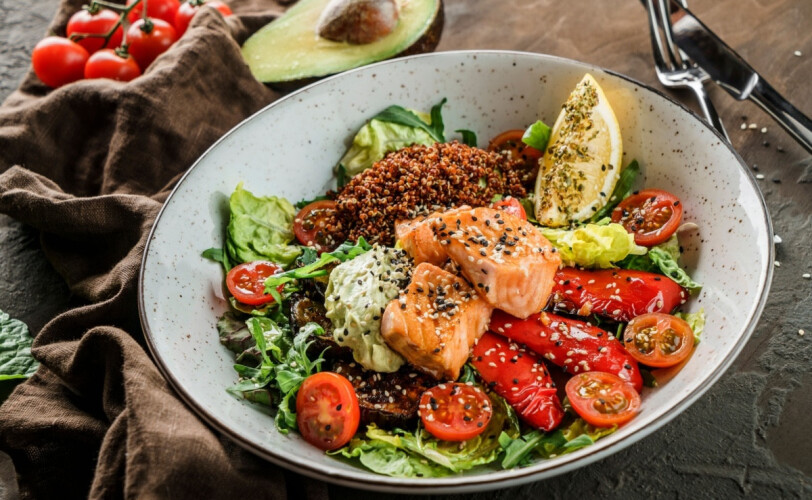
This dish is the ultimate celebration of the summer season with its vibrancy and freshness! This summer salmon salad bowl is quick and easily prepared in batches for future meals. It makes a great office lunch to keep you feeling full and focused all afternoon. If you’re looking for a vegetarian option, swap the salmon for halloumi or pan-fried tofu. Whilst these still contain quantities of protein, they won’t provide the brain benefits of omega-3 found in oily fish.
Summer salmon salad recipe
Makes 2 bowls
Ingredients:
For the bowls:
- 2 salmon fillets (skin on or off)
- 100g quinoa (or brown basmati rice)
- 100g baby spinach or rocket
- 1 avocado, sliced
- 100g cherry tomatoes, halved
- 50g red bell pepper, thinly sliced
- 1 spring onion, sliced
- 1 tbsp olive oil (for cooking)
- Salt and pepper to taste
For the dressing:
- 1 tbsp tahini
- 1 tbsp plain yoghurt
- Juice of ½ lemon
- 1 tbsp each of fresh parsley and dill, finely chopped
- 1 tsp olive oil
- 1 small garlic clove, minced
- Pinch of salt and pepper
Method:
- Cook the quinoa (if not already cooked) or rice: Rinse quinoa in a sieve, then add to 300 ml water and a pinch of salt in a small saucepan. Bring to a boil, reduce the heat, cover, and simmer for about 15 minutes, or until water is absorbed. Fluff with a fork and let cool slightly.
- Cook the salmon: Heat 1 tbsp olive oil in a pan over medium heat. Season the salmon with salt and pepper. Cook for 4-5 minutes per side (slightly longer for crispy skin), until flaky and opaque throughout. Set aside.
- Make the dressing: In a small bowl, whisk together tahini, yoghurt, lemon juice, herbs, olive oil, garlic, and salt. Add water (1-2 tsp) if needed to thin to the desired consistency.
- Assemble the bowls: Divide greens, quinoa, tomatoes, bell pepper, and avocado between two bowls. Top each with a salmon fillet and sprinkle with pumpkin seeds. Drizzle with dressing just before serving.
- Optional: Lightly toast 2 tbsp of seeds (pumpkin, sesame, sunflower) with 1 tsp of soy sauce and sprinkle onto salmon to add texture and flavour.
The healthy bit
Research has shown that consuming a diet filled with various nutrients and antioxidants offers mood-boosting benefits in a number of ways. The salmon in this recipe contains the fatty acid omega-3, and specifically EPA (eicosapentaenoic acid), a compound that can help reduce inflammation and is a crucial component in brain cell membranes. Inflammation disrupts neurotransmitter functioning and causes fatigue, both of which have a negative impact on mood. Whilst omega-3 is found in walnuts, flax, hemp and chia seed, oily fish can be converted into higher quantities of EPA in the body. Salmon is also a great source of protein, which provides the building blocks for neurotransmitters, crucial in regulating mood, motivation, and concentration.
Our first thought might not be the digestive system when looking to boost mood, but dietary fibre plays an important role in the gut-brain axis. Prebiotics in the avocado, spring onion and quinoa in this recipe feed beneficial gut bacteria, which helps to keep the intestinal lining healthy. This can reduce inflammation and modulate neurotransmitters like serotonin and dopamine. Furthermore, natural yoghurt, included in the recipe, contains probiotics which support a healthy microbiome. You could also include some kimchi or sauerkraut with your salad to increase this even more.
Whilst carbohydrate is important for energy, we want it to be released slowly to sustain energy levels. The fibre (vegetables), protein (salmon, quinoa), and fat (avocado, seeds, olive oil) will help to achieve this. Fluctuations in blood glucose levels can affect mood; when too high or too low, it can make us tired and irritable or even shaky, light-headed and emotional.
Antioxidants are compounds that plants produce to protect themselves from sunlight, extreme temperatures and pollution, which also benefit us when we eat them. In this recipe, the tomatoes, leafy greens, bell peppers and olive oil provide great quantities of antioxidants which help protect brain cells from oxidative stress and inflammation. You could include even more colour with beetroot, cucumber, carrot, squash, etc.
This article was published in Happiful Magazine (Issue 101). You can order print copies online, or read the e-magazine for free on the Happiful app.
Looking for more inspiration? Visit our Recipe hub.

Find the right nutritionist for you
All nutrition professionals are verified